
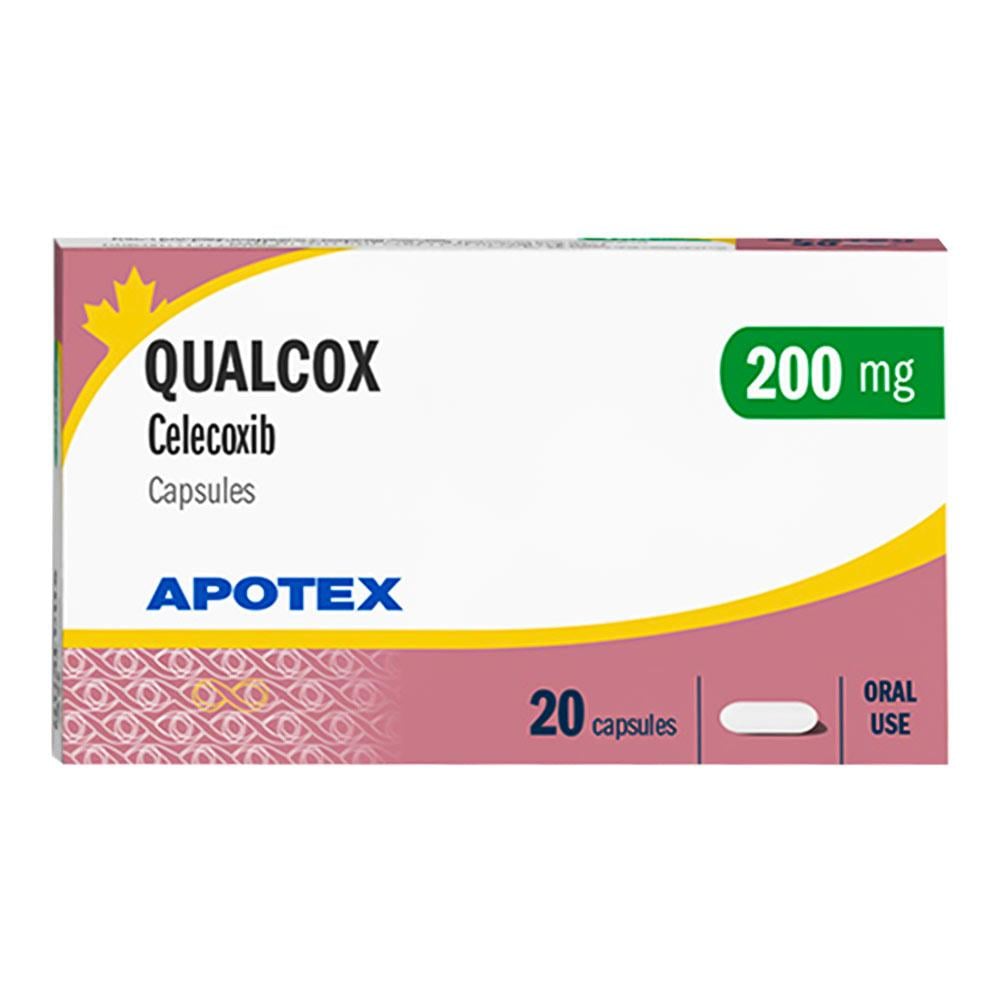
Description:
• Qualcox is used in adults to relieve the signs and symptoms of rheumatoid arthritis, osteoarthritis, and ankylosing spondylitis.
• Qualcox belongs to a group of drugs called non-steroidal anti-inflammatory drugs (NSAIDs)
• You should expect your medication to start working within hours of taking the first dose, but you may not feel the full effect for several days.
What you need to know before taking Qualcox :
Do not use Qualcox if:
• You are allergic to Qualcox or any of the other ingredients in this medicine
• You had an allergic reaction to a group of drugs called "sulfonamides"
• You currently have an ulcer in your stomach or intestines, or bleeding in your stomach or intestines.
• As a result of taking acetylsalicylic acid or any other anti-inflammatory and pain-relieving medication (NSAID), you have asthma, nasal polyps, severe nasal congestion, or an allergic reaction such as a rash, itching, swelling of the face, lips, tongue, or throat, difficulty breathing, or wheezing.
• You have acute liver disease
• You have acute kidney disease
• You have an inflammatory bowel disease such as ulcerative colitis or Crohn's disease
• You have heart failure, confirmed ischemic heart disease, or cerebrovascular disease, for example. You have been diagnosed with a heart attack, stroke, transient ischemic attack (TIA), angina, or a blockage of blood vessels in the heart or brain.
• You have or have had circulatory problems (peripheral artery disease) or if you have had surgery on the arteries in your legs
Precautions and warnings:
Speak to your doctor or pharmacist before taking Qualcox :
• If you have ever suffered from an ulcer or bleeding in your stomach or intestines
• If you are using Qualcox at the same time as other nonsteroidal anti-inflammatory drugs (NSAIDs) that do not contain acetylsalicylic acid, such as ibuprofen or diclofenac, you should avoid using these medications together.
• If you are a smoker, or have diabetes, high blood pressure, or high cholesterol
• If your heart, liver, or kidneys are not functioning properly, your doctor may want to monitor your condition regularly.
• If you are suffering from fluid retention (such as swelling of the ankles and feet)
• If you are dehydrated, for example due to illness, diarrhea, or the use of diuretics (used to treat excess fluid in the body)
• If you feel unwell due to an infection or think you may have an infection, and if you are over 65 years old, your doctor will want to monitor you regularly.
• Consuming alcohol and nonsteroidal anti-inflammatory drugs (NSAIDs) may increase the risk of gastrointestinal problems.
How to take Qualcox :
Qualcox for oral use.
The capsules can be taken at any time of day, with or without food. However, try to take each dose of Qualcox at the same time every day.
Contact your doctor within two weeks of starting treatment if you do not experience any benefit.
The recommended dose is:
One capsule daily, and your doctor may increase it to a maximum of two capsules, if necessary.
Possible side effects:
Stop using the product and seek immediate medical attention if you experience hives, rash, chest tightness, wheezing, chest pain, severe stomach pain, or jaundice.
It is recommended to use it with Faster cream for those suffering from joint pain.